Mogette · Chapter 4
At home
Don’t buy what you have, finish what is open.
Waste starts when the shopping comes home. The app puts the receipt into a stock, uses the fridge to finish first in the menu, and never puts back on the list what is already in the cupboard.

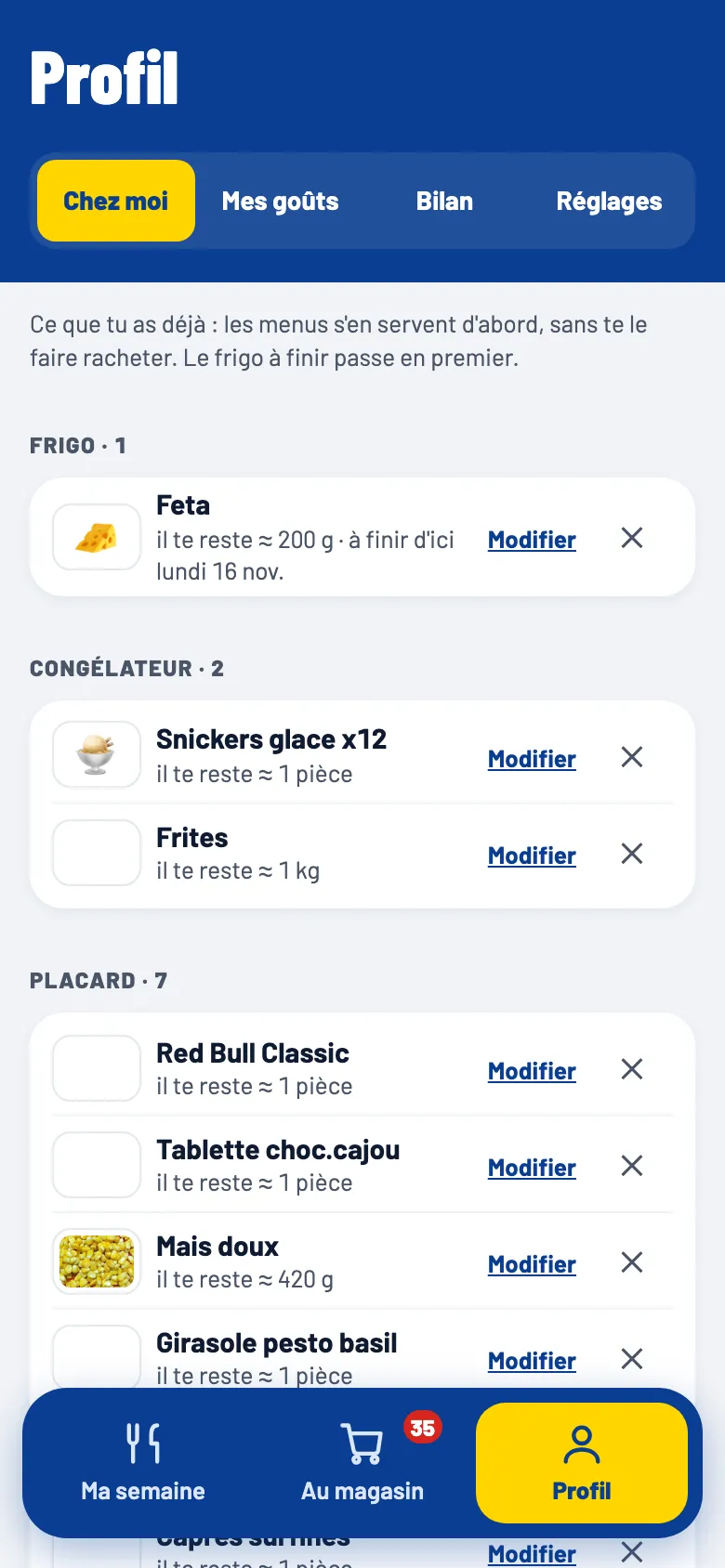


The stock, from the receipt
For ten days after a trip to the till, the receipt shows up ready to put away: each food product with its pack, its place and when to finish it.
I untick what is already gone, and the rest goes into the stock. Cat and household products are left out, loose fruit and vegetables go in without an invented weight, water and sodas are never tracked. For everything else, the camera reads a barcode and Open Food Facts names the product.
The menu uses the stock first. The fridge to finish comes first, leftover packs from one week roll into the next, and “J’ai cuisiné” (I cooked it) takes the ingredients out of the stock. Basics (salt, oil, spices) stay apart: never tracked, never bought.
Shared with the house
The stock is the same as the one in Grocy, which runs in Mogi, my Home Assistant system.
The house is not open to the internet. It calls the app’s server every two minutes, applies pending changes to Grocy and sends its stock back. When a value changed on both sides, the one I just typed in the app wins; otherwise Grocy’s comes back.
My tastes
Removing a food does not ban a recipe: the app redoes it with an equivalent, on offer or already at home.
What I like rises to the top of the deals as soon as it is discounted, with its usual price read from my receipts. Hidden deals are managed in the same place. The app also shows what it has learned: known prices, dishes I often change, purchases it keeps an eye on.
The summary
A monthly budget, if I want one: the menu then picks dishes that fit it.
The summary adds up what was spent and saved on receipts, and compares the total planned for the week with the real receipt. Each receipt opens line by line, with its discounts.